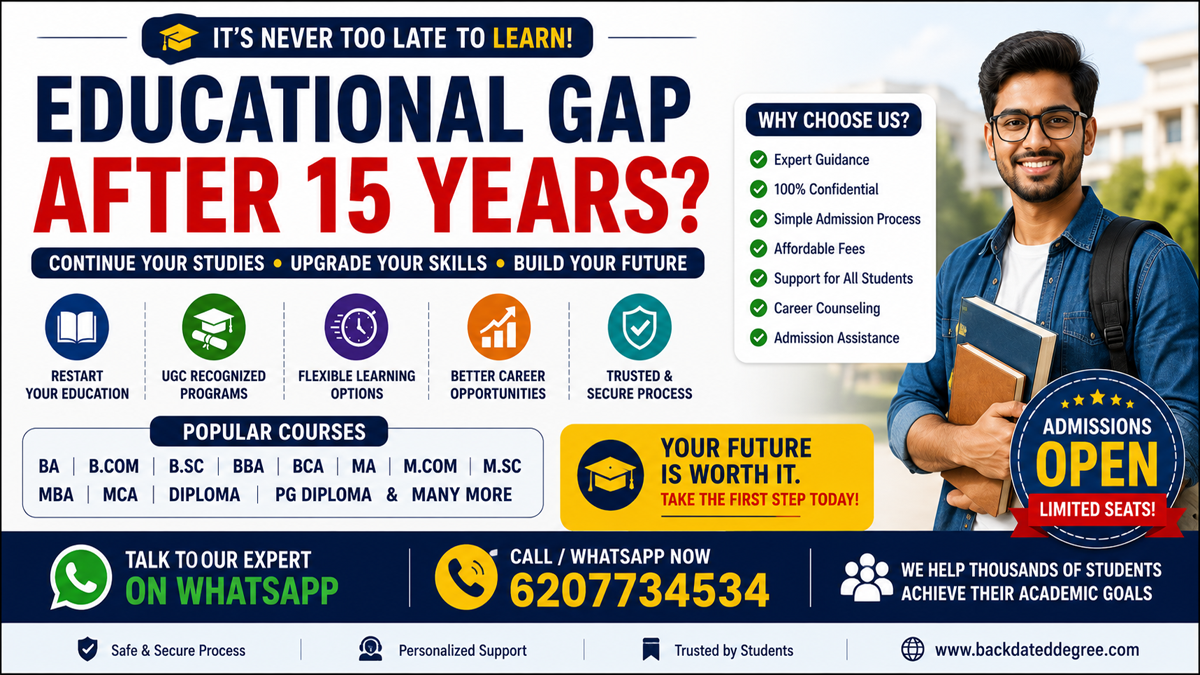
Educational Gap After 15 Years: Is It Possible to Continue Your Studies?
Many individuals take a long break from formal education because of employment, family responsibilities, financial circumstances, business commitments, relocation, or personal reasons. A 15-year educational gap may seem significant, but it does not necessarily prevent someone from pursuing further education. Admission requirements vary between institutions and programmes, so prospective students should always review the latest official eligibility criteria before applying.
Returning to education after a long gap requires careful planning. Organising previous academic records, understanding admission procedures, choosing a course that aligns with your career goals, and maintaining a consistent study schedule are practical steps that can support your educational journey.
Educational Awareness
Instead of focusing only on the duration of the academic gap, concentrate on your future learning goals. Review official admission notifications, understand programme requirements, and prepare the necessary documents before applying.
Academic Planning GuideTable of Contents
What is an Educational Gap?
An educational gap refers to a period during which a learner temporarily pauses formal education before resuming academic studies later. The duration of the gap can vary from a few months to several years depending on personal, professional, financial, or family circumstances.
A 15-year educational gap may appear significant, but many individuals decide to continue their education later in life for career growth, personal development, higher qualifications, or changing professional goals. Every learner has a unique educational journey, and institutions may have different admission policies and eligibility requirements.
Rather than viewing an educational gap as an obstacle, it can be helpful to focus on future learning objectives, selecting a suitable programme, and understanding the admission process through official sources.
Educational Awareness
A long educational gap does not automatically determine admission eligibility. Always review the official admission guidelines, eligibility criteria, and programme requirements of your chosen institution before applying.
Can You Continue Studies After a 15-Year Educational Gap?
Yes, many universities and educational institutions consider applications from learners who have taken a long academic break, provided they meet the eligibility criteria for the selected programme. Admission policies vary depending on the institution, the course, and current regulations.
Students returning after a long gap often bring valuable life experience, professional knowledge, and practical skills. These strengths can support their academic journey when combined with careful planning and consistent study habits.
Important Points Before Applying
- Review the latest eligibility criteria on the official university website.
- Choose a course aligned with your educational background and career goals.
- Prepare all academic documents before the admission process begins.
- Understand programme duration and learning requirements.
- Create a practical study schedule that fits your daily routine.
- Keep track of official admission dates and notifications.
Common Reasons Behind a 15-Year Educational Gap
Students pause their education for many different reasons. Every academic journey is different, and a long educational gap can result from personal, professional, or financial circumstances.
| Reason | Description |
|---|---|
| Employment | Many individuals begin working to gain financial stability or professional experience. |
| Business | Running a business may delay further education. |
| Family Responsibilities | Marriage, childcare, or caring for family members may require temporary educational breaks. |
| Financial Challenges | Economic circumstances may postpone academic plans. |
| Health Reasons | Medical situations may interrupt formal education. |
| Career Development | Professional growth or skill-building may take priority for some learners. |
| Relocation | Moving to another city or country may temporarily interrupt studies. |
Benefits of Continuing Education After 15 Years
Returning to education can provide opportunities for both academic and professional development. Continuous learning helps many individuals update their knowledge, improve skills, and prepare for future educational or career goals.
- Improve subject knowledge and practical skills.
- Support long-term career development.
- Prepare for higher education opportunities.
- Increase confidence through lifelong learning.
- Develop communication and analytical skills.
- Learn updated technologies and industry practices.
- Expand professional networking opportunities.
- Encourage personal growth and continuous improvement.
Educational Planning After a 15-Year Gap
A structured academic plan can make returning to education more manageable. Instead of focusing on the years away from formal study, concentrate on setting realistic educational goals and following a consistent learning routine.
Recommended Planning Steps
- Identify your long-term academic and career objectives.
- Select a programme that matches your previous qualifications.
- Verify admission eligibility through official sources.
- Collect and organise all required documents.
- Create a weekly study timetable.
- Improve computer and digital learning skills.
- Stay updated with official admission notifications.
- Maintain consistency throughout your learning journey.
Helpful Educational Tip
Whether your educational gap is 5 years, 10 years, or 15 years, success depends on planning, commitment, and continuous learning. Focus on your future goals and verify admission requirements directly with the official institution before applying.
Academic Planning Guide Continue Studies GuideHow to Resume Your Education After a 15-Year Gap
Resuming education after a 15-year gap may seem challenging, but many learners successfully continue their studies by preparing in advance and understanding the admission process. A structured plan can help reduce uncertainty and improve confidence.
Rather than focusing on the length of the gap, begin by identifying your educational goals, reviewing eligibility requirements, and selecting a programme that matches your previous qualifications and future aspirations.
Step 1 – Identify Your Goal
Decide why you want to return to education. Your objective may be career growth, higher education, professional development, personal learning, or preparing for future opportunities.
Step 2 – Choose the Right Programme
Research available undergraduate, postgraduate, diploma, or certificate programmes. Compare eligibility, duration, curriculum, and future career opportunities before making a decision.
Step 3 – Verify Admission Requirements
Admission policies differ between institutions. Always read the official admission notification and confirm the latest eligibility criteria before submitting an application.
Step 4 – Organise Your Documents
Collect your educational records, identity documents, photographs, and any additional documents required by the institution. Keeping documents organised can simplify the admission process.
Step 5 – Build a Practical Study Routine
A realistic study schedule is especially important for working professionals and learners with family responsibilities. Regular study sessions often produce better long-term results than occasional intensive study.
Documents Commonly Required for Admission
The required documents vary by institution and programme. However, students are commonly asked to provide the following documents during the admission process.
| Document | Purpose |
|---|---|
| 10th Mark Sheet | Academic Qualification Record |
| 12th Mark Sheet | Eligibility Verification |
| Previous Degree (if applicable) | Admission to Higher Programmes |
| Government Identity Proof | Identity Verification |
| Passport Size Photographs | Admission Records |
| Address Proof | Communication Purpose |
| Other Supporting Documents | As specified by the institution |
Popular Courses Students Consider After a 15-Year Educational Gap
Course selection should always be based on your previous educational qualifications, career goals, interests, and the eligibility requirements of the institution. The following programmes are commonly explored by learners returning to education.
| Level | Examples |
|---|---|
| Undergraduate | BA, B.Com, B.Sc, BBA, BCA |
| Postgraduate | MA, M.Com, M.Sc, MBA, MCA |
| Diploma | Professional Diploma Programmes |
| Certificate | Skill Development & Professional Courses |
Higher Education for Working Professionals
Many learners returning after a 15-year educational gap are already employed. Managing work and education together requires careful planning, discipline, and realistic expectations.
- Create a weekly study timetable.
- Study consistently rather than occasionally.
- Keep digital notes for revision.
- Improve computer and communication skills.
- Stay informed through official academic notifications.
- Review your progress every month.
- Maintain a healthy balance between work, family, and education.
Educational Planning Tip
Continuous learning helps learners remain academically active and professionally prepared. Select a programme that aligns with your long-term educational and career objectives.
Working Professionals GuideCareer Opportunities After Continuing Education
Returning to education can strengthen your academic foundation and support future career development. Opportunities vary depending on the course completed, individual skills, and employer requirements.
| Area | Examples |
|---|---|
| Private Sector | Professional and Corporate Roles |
| Government Opportunities | Subject to recruitment rules and eligibility |
| Higher Education | Advanced Degree Programmes |
| Professional Certifications | Industry-Specific Learning |
| Entrepreneurship | Business and Self-Employment |
| Skill Development | Technical and Professional Training |
Plan Your Educational Journey with Confidence
A 15-year educational gap is only one chapter in your learning journey. Careful planning, selecting a suitable programme, maintaining consistency, and following official admission guidelines can help you confidently continue your education and pursue your future goals.
Academic Planning Guide Degree Completion GuideCommon Challenges Students Face After a 15-Year Educational Gap
Returning to education after a gap of fifteen years may feel overwhelming in the beginning. Many learners have work responsibilities, family commitments, or have been away from formal learning for a long time. Understanding these challenges and preparing for them can make the transition much smoother.
1. Adjusting to Academic Learning Again
After a long break, students may need time to become comfortable with studying, note-taking, assignments, examinations, and academic writing. Building a daily study routine gradually can help improve confidence.
2. Balancing Work, Family, and Education
Many adult learners manage multiple responsibilities. A practical study schedule and realistic weekly goals can help maintain consistency without creating unnecessary stress.
3. Learning New Technology
Modern education often uses online portals, digital libraries, video lectures, and electronic assignments. Improving basic computer and internet skills can make learning more effective.
4. Understanding Updated Curriculum
Course content and teaching methods may have changed significantly over the years. Reviewing the latest syllabus and recommended learning resources can help bridge this gap.
5. Admission Documentation
Before applying, ensure that all educational certificates, mark sheets, identity documents, and supporting records are available and organised according to institutional requirements.
How to Overcome These Challenges
With the right approach, returning to education after a long gap becomes much easier. The following practical suggestions may help learners stay organised throughout their academic journey.
- Create a fixed daily or weekly study schedule.
- Study consistently instead of only before examinations.
- Improve computer and digital learning skills.
- Read updated books and learning materials.
- Keep track of important admission dates.
- Review your academic progress regularly.
- Maintain both digital and printed copies of important documents.
- Seek guidance from official university support services whenever required.
Educational Planning Checklist
Before beginning your educational journey after a 15-year gap, use this checklist to stay organised.
| Task | Status |
|---|---|
| Define educational goals | ✔ |
| Select the appropriate course | ✔ |
| Verify admission eligibility | ✔ |
| Prepare academic documents | ✔ |
| Create a study timetable | ✔ |
| Improve computer skills | ✔ |
| Track admission deadlines | ✔ |
| Follow official university notifications | ✔ |
Common Mistakes to Avoid
Many students can improve their educational experience by avoiding a few common mistakes.
- Choosing a course without researching career objectives.
- Ignoring official admission eligibility requirements.
- Submitting incomplete or incorrect documents.
- Depending only on unofficial sources of information.
- Skipping regular study sessions.
- Not developing time management skills.
- Ignoring opportunities for skill development.
- Waiting until the last date to complete admission formalities.
Expert Tips for Returning to Education After 15 Years
Educational Success Tips
- Focus on your future goals instead of the years spent away from education.
- Build a consistent study habit.
- Keep learning new digital and communication skills.
- Read official notifications carefully before applying.
- Maintain organised academic records.
- Develop both academic knowledge and practical skills.
- Stay motivated and celebrate small achievements.
- Continue learning throughout your career.
Continue Your Educational Journey with Confidence
Returning to education after a 15-year gap requires planning, commitment, and continuous learning. Focus on selecting a suitable programme, understanding admission requirements, organising your documents, and maintaining a consistent study routine. Always verify the latest eligibility criteria and admission procedures through the official university or institution before making any academic decision.
Academic Planning Guide Continue Studies Guide Get Educational Guidance
Frequently Asked Questions (FAQs)
1. Can I continue my studies after a 15-year educational gap?
Many institutions consider applications from learners with a long educational gap, provided they meet the current eligibility requirements and admission criteria.
2. Does a 15-year gap affect admission?
Admission policies differ from one institution to another. Always review the latest official admission guidelines before applying.
3. Can working professionals continue higher education?
Many working professionals continue their education while balancing work and personal responsibilities, depending on the available learning options and institutional policies.
4. What documents are generally required?
Institutions commonly ask for previous academic records, identity proof, photographs, and other documents specified in the admission notification.
5. Which course should I choose?
The most suitable programme depends on your previous qualifications, interests, career objectives, and eligibility.
6. Is there an age limit for continuing education?
Age requirements vary by programme and institution. Always verify the official eligibility criteria.
7. How can I prepare after a long educational gap?
Create a study schedule, organise your documents, improve digital skills, and review the latest syllabus before beginning your studies.
8. Can I pursue postgraduate education after a long gap?
Eligibility depends on your previous qualifications and the admission rules of the institution offering the programme.
9. How important is academic planning?
A clear academic plan helps learners select suitable courses, manage time effectively, and stay focused on long-term educational goals.
10. Where can I verify admission information?
Always refer to the official website of the university or educational institution for authentic and updated information.