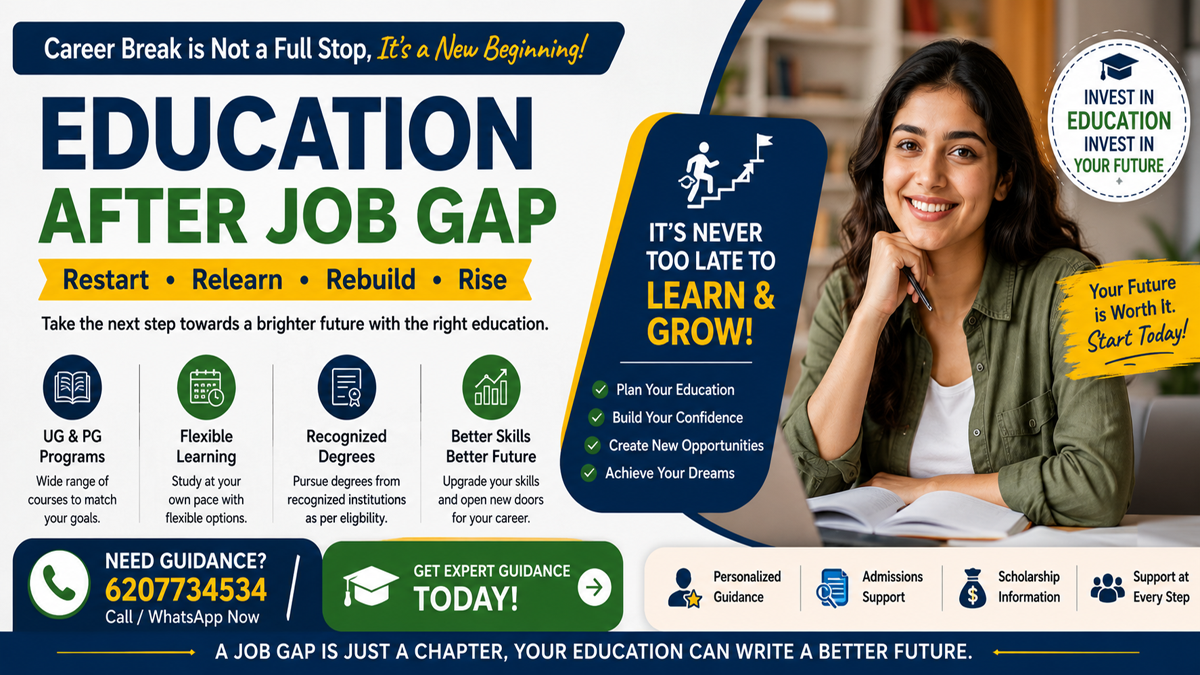
Why Continue Education After a Job Gap?
A job gap can occur for many reasons, including career transitions, family responsibilities, health-related circumstances, relocation, entrepreneurship, or personal development. Returning to education after such a break can help individuals strengthen their knowledge, update professional skills, and prepare for future educational or career opportunities.
Every learner has unique goals and circumstances. Choosing an appropriate educational pathway requires careful planning, understanding eligibility requirements, and reviewing official admission guidelines issued by the concerned university or educational institution.
Continuing education is not only about earning a qualification. It also encourages lifelong learning, improves communication and analytical skills, develops digital literacy, and supports personal growth. Educational outcomes depend on individual effort, programme quality, and institutional requirements.
Educational Planning Tip
Before applying for any programme, verify eligibility criteria, admission procedures, curriculum, recognition status, fee structure, and examination policies directly through the official university or educational institution.
Academic Planning GuideTable of Contents
What is a Job Gap?
A job gap is a period during which an individual is not engaged in regular employment. Career breaks may occur due to higher education, family responsibilities, health-related reasons, relocation, entrepreneurship, personal development, military service, or changing career paths. A job gap is common and can happen at different stages of a professional journey.
Returning to education after a job gap can help learners refresh their knowledge, improve technical and professional skills, and prepare for future academic or career opportunities. Many educational institutions offer programmes suitable for learners from different backgrounds, subject to their admission policies and eligibility criteria.
Every learner has different objectives. Some may wish to upgrade their qualifications, while others may focus on learning new technologies, management concepts, communication skills, or preparing for higher education.
Career Planning Tip
Identify your long-term educational and professional goals before selecting a programme. Compare institutions carefully and always verify official admission guidelines.
Career Growth GuideCommon Reasons for a Job Gap
Career breaks are part of many professional journeys. Understanding the reason behind a job gap helps learners select an appropriate educational pathway and career development strategy.
| Reason | Description |
|---|---|
| Higher Education | Many professionals pause employment to pursue further studies or specialised training. |
| Family Responsibilities | Family commitments may require temporary career breaks. |
| Health Recovery | Health-related situations sometimes require individuals to focus on recovery before returning to work or study. |
| Career Transition | Changing industries often involves learning new skills or qualifications. |
| Entrepreneurship | Some individuals take a break to start or manage their own business. |
| Personal Development | Travel, volunteering, certifications, or skill development may also create a career gap. |
Why Continue Education After a Job Gap?
Continuing education after a job gap can help learners update their knowledge, strengthen professional competencies, and improve confidence. Education also supports lifelong learning by encouraging individuals to stay informed about new developments in their chosen field.
Major Advantages
- Update subject knowledge.
- Improve communication and presentation skills.
- Develop digital literacy and technical competencies.
- Prepare for higher education opportunities.
- Support long-term career planning.
- Increase confidence through continuous learning.
- Enhance research and analytical thinking abilities.
- Develop leadership and teamwork skills.
- Stay informed about changing industry trends.
- Strengthen professional adaptability.
Educational qualifications are one part of career development. Professional experience, continuous learning, and practical skills also play important roles in long-term success.
Career Benefits of Continuing Education
Education helps individuals build knowledge and practical skills that may support career development across different industries. Career outcomes depend on qualifications, practical experience, employer expectations, and continuous professional growth.
| Educational Benefit | Possible Outcome |
|---|---|
| Knowledge Enhancement | Improved understanding of academic and professional subjects. |
| Professional Skills | Better communication, leadership, teamwork, and problem-solving. |
| Career Planning | Supports long-term educational and professional goals. |
| Higher Education | May help meet eligibility requirements for advanced programmes, depending on institutional policies. |
| Personal Development | Improves confidence, discipline, and lifelong learning habits. |
Educational Planning After a Career Break
Proper planning helps learners make informed educational decisions. Before selecting any programme, compare curriculum, admission eligibility, recognition status, learning format, fee structure, examination system, and student support services using official institutional resources.
Planning Checklist
- ✔ Define your educational objective.
- ✔ Review previous academic qualifications.
- ✔ Verify official admission requirements.
- ✔ Compare universities and programmes.
- ✔ Prepare a realistic study schedule.
- ✔ Develop digital and communication skills.
- ✔ Stay updated with official notifications.
- ✔ Continue professional learning after programme completion.
Continue Your Learning Journey
Explore more educational awareness guides to understand academic planning, degree completion, lifelong learning, and career development opportunities.
Degree Completion Guide Continue Studies Guide Working Professionals GuideStep-by-Step Roadmap for Continuing Education After a Job Gap
Returning to education after a job gap requires planning, commitment, and a clear understanding of your academic and career goals. Whether your break lasted a few months or several years, a structured approach can help you confidently resume learning and build new opportunities.
Step 1: Assess Your Career Goals
Begin by identifying why you want to continue your education. Your goal may be to strengthen existing knowledge, prepare for higher education, develop new professional skills, or explore a different career path. A clear objective helps you choose the most appropriate academic programme.
Step 2: Review Previous Qualifications
Collect your academic records, certificates, mark sheets, and other educational documents. Understanding your previous qualifications helps determine eligibility for future programmes according to the admission policies of the respective institution.
Step 3: Identify Skill Gaps
Industries evolve continuously. Before selecting a programme, identify the technical, communication, digital, or professional skills that can support your future career plans. Upskilling alongside formal education can improve overall preparedness.
Step 4: Choose the Right Educational Path
Compare universities and educational institutions based on curriculum, eligibility criteria, learning mode, examination system, student support services, accreditation, and official recognition. Always rely on official institutional information before applying.
Step 5: Build a Consistent Study Routine
Create a realistic study timetable that fits your daily schedule. Consistency, rather than long study sessions, often leads to better long-term learning outcomes.
Step 6: Continue Learning Beyond the Programme
Education is a continuous process. Reading industry publications, attending workshops, completing certification courses, and participating in professional development activities can help maintain relevant knowledge and skills.
How to Choose the Right Course After a Job Gap
Selecting the right educational programme depends on your interests, previous qualifications, future aspirations, and eligibility requirements. Consider the following factors before making a decision.
| Factor | Why It Matters |
|---|---|
| Educational Background | Choose programmes that align with your previous qualifications. |
| Career Objectives | Select courses that support your long-term professional goals. |
| Eligibility Requirements | Verify official admission criteria before applying. |
| Learning Format | Evaluate classroom, blended, or online learning options as available. |
| Curriculum | Review subjects, learning outcomes, and assessment methods. |
| Institutional Recognition | Confirm recognition and accreditation through official sources. |
Essential Skills to Develop After a Career Break
Along with formal education, developing practical skills can support academic success and long-term professional growth.
- Communication Skills
- Critical Thinking
- Problem Solving
- Digital Literacy
- Research Skills
- Presentation Skills
- Leadership
- Teamwork
- Time Management
- Adaptability
- Professional Ethics
- Continuous Learning Mindset
These competencies are valuable across many industries and contribute to personal and professional development.
Study Tips for Working Professionals Returning to Education
Balancing work, family responsibilities, and education requires discipline and planning. The following strategies may help working professionals continue learning effectively.
| Challenge | Suggested Strategy |
|---|---|
| Busy Schedule | Create a weekly study calendar with achievable goals. |
| Work Commitments | Study during fixed time slots each day. |
| Technology Changes | Improve digital literacy through regular practice. |
| Maintaining Motivation | Track progress and celebrate small milestones. |
| Knowledge Refresh | Review previous concepts before beginning advanced topics. |
Education Success Checklist After a Job Gap
Use this checklist to stay organised throughout your educational journey.
- ✔ Define clear educational and career goals.
- ✔ Organise previous academic documents.
- ✔ Verify admission eligibility.
- ✔ Compare universities and programmes.
- ✔ Create a realistic study schedule.
- ✔ Develop communication and digital skills.
- ✔ Stay updated through official notifications.
- ✔ Continue professional learning after programme completion.
- ✔ Build practical experience whenever possible.
- ✔ Review progress regularly and adjust your learning plan.
Continue Your Educational Journey with Confidence
Returning to education after a job gap is an opportunity to expand your knowledge, strengthen professional skills, and prepare for future academic or career goals. Make informed decisions by reviewing official admission requirements and selecting programmes that align with your long-term objectives.
Degree Completion Guide Benefits of Degree Completion Career Growth GuideCommon Challenges When Returning to Education After a Job Gap
Returning to education after a career break can be rewarding, but learners may also face practical challenges. Understanding these challenges in advance allows you to prepare effective strategies and make informed educational decisions.
1. Balancing Work, Family, and Education
Many adult learners manage employment, family responsibilities, and studies simultaneously. Creating a realistic timetable and maintaining consistency can help reduce stress and improve learning outcomes.
2. Adjusting to Modern Learning Methods
Educational institutions increasingly use digital learning platforms, online resources, virtual classrooms, and electronic assessments. Improving digital literacy before starting a programme can make the transition easier.
3. Updating Subject Knowledge
After a career break, some learners may need to refresh concepts before beginning advanced coursework. Reviewing previous subjects and using official learning resources can help rebuild confidence.
4. Choosing the Right Programme
Selecting an educational programme without understanding eligibility requirements or career goals may create unnecessary difficulties. Compare different institutions carefully before applying.
5. Staying Motivated
Long-term educational success depends on regular study habits, clear goals, and continuous self-improvement. Celebrate small achievements and track your learning progress regularly.
Practical Strategies to Overcome Educational Challenges
Every learner's situation is unique. The following strategies may help improve academic planning and educational success.
| Challenge | Suggested Strategy |
|---|---|
| Time Management | Create a weekly study schedule and follow it consistently. |
| Knowledge Gap | Review previous concepts before beginning advanced topics. |
| Technology Skills | Practice using online learning platforms and productivity tools. |
| Career Planning | Set clear short-term and long-term educational goals. |
| Maintaining Motivation | Track progress and reward yourself after achieving milestones. |
| Study Resources | Use official textbooks, university materials, and reliable educational resources. |
Success Tips for Education After a Job Gap
Successful learners usually combine academic planning with continuous skill development. These practical tips can support long-term educational growth.
- Set realistic educational goals.
- Verify programme eligibility through official sources.
- Maintain a regular study routine.
- Improve communication and digital literacy.
- Develop problem-solving and analytical skills.
- Read academic and industry-related publications regularly.
- Participate in workshops and certification programmes.
- Build confidence through continuous practice.
- Stay informed about institutional announcements.
- Continue lifelong learning beyond graduation.
Common Mistakes to Avoid
Avoiding common mistakes can help learners make better educational decisions and improve long-term outcomes.
- Choosing a programme without reviewing eligibility requirements.
- Ignoring official admission notifications.
- Depending only on unofficial information.
- Skipping document verification before admission.
- Ignoring communication and digital skill development.
- Not preparing a long-term educational plan.
- Delaying study preparation until examinations.
- Overlooking continuous professional learning.
Conclusion
A job gap does not prevent lifelong learning. With proper planning, updated knowledge, and informed decision-making, learners can continue their education and work toward their personal and professional goals. The most suitable educational pathway depends on individual interests, previous qualifications, eligibility requirements, and long-term aspirations.
Before applying to any programme, carefully review the official admission notification, eligibility criteria, curriculum, fee structure, examination process, and recognition status provided by the respective university or educational institution. Making informed decisions helps create a strong foundation for future educational and career development.
Plan Your Educational Journey with Confidence
Explore our educational awareness resources to learn about degree completion, higher education opportunities, career planning, and lifelong learning. Always verify admission details through official institutional sources before making any educational decision.
Academic Planning Guide Career Growth Guide Degree Verification GuideFrequently Asked Questions (FAQs)
1. What is education after a job gap?
Education after a job gap refers to continuing academic studies, professional certifications, or skill-development programmes after a period away from employment.
2. Can I continue my education after a career break?
Many educational institutions accept learners returning after a career break, subject to their admission rules and eligibility criteria.
3. Why should I study after a job gap?
Continuing education can help refresh knowledge, improve professional skills, and prepare learners for future educational or career opportunities.
4. How do I choose the right course?
Choose a programme based on your educational background, interests, long-term goals, and the official admission requirements of the institution.
5. Can working professionals continue higher education?
Many working professionals pursue higher education while balancing work and personal responsibilities through effective planning.
6. Does continuing education improve career prospects?
Education can strengthen knowledge and skills. Career outcomes also depend on experience, industry demand, and employer expectations.
7. What documents are generally required for admission?
Requirements vary by institution but often include previous academic records, identity documents, and application forms. Always verify official admission guidelines.
8. How can I balance work and study?
Create a weekly study schedule, set realistic goals, and maintain consistency throughout your learning journey.
9. Can I pursue higher education after completing graduation?
Eligibility depends on the admission rules of the respective university or educational institution.
10. Where should I verify admission information?
Always refer to the official university or institution for the latest eligibility criteria, fee structure, curriculum, and admission process.