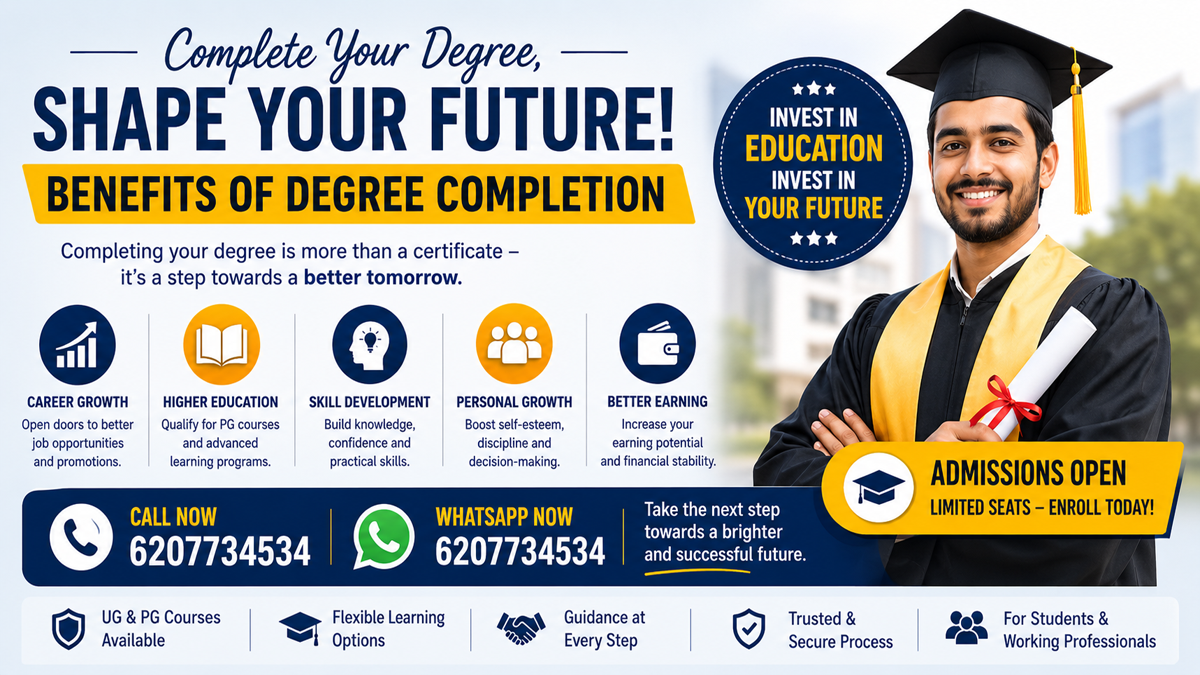
Why Completing Your Degree Matters
Completing a degree is an important educational milestone that reflects commitment, discipline, and continuous learning. For many learners, degree completion is not only about earning a qualification but also about improving knowledge, developing professional skills, and preparing for future educational or career opportunities.
Students may return to complete their education after an academic gap for many reasons, including career planning, personal goals, higher education aspirations, or professional development. Every learner's journey is unique, and educational pathways vary depending on eligibility requirements and institutional policies.
Beyond academic achievement, degree completion often helps individuals strengthen critical thinking, communication, problem-solving, research, and time management skills. These abilities are valuable across many professions and industries.
Educational Planning Tip
Before applying for any educational programme, review the official admission guidelines, eligibility criteria, programme structure, and recognition status published by the concerned university or educational institution.
Academic Planning GuideTable of Contents
What is Degree Completion?
Degree completion refers to successfully finishing an undergraduate or postgraduate academic programme after meeting all academic requirements prescribed by the educational institution. For many learners, completing a degree represents an important milestone that demonstrates commitment, perseverance, and continuous learning.
Students complete their degrees for different reasons. Some continue their education immediately after school, while others return after an educational gap due to employment, financial responsibilities, family commitments, health concerns, or personal circumstances. Regardless of the reason, careful academic planning and awareness of official admission policies are essential.
Completing a degree can strengthen subject knowledge, improve analytical thinking, enhance communication abilities, and prepare learners for future educational or professional opportunities. Educational outcomes vary depending on the learner's efforts, programme quality, and career objectives.
Academic Planning Reminder
Always verify eligibility criteria, admission requirements, programme recognition, duration, fee structure, and official university notifications before applying for any educational programme.
Continue Studies GuideTop Benefits of Degree Completion
Completing a degree offers several educational and professional advantages. While career outcomes depend on many factors—including skills, experience, industry demand, and employer expectations—a completed degree can strengthen your academic profile and support future learning opportunities.
| Benefit | Description |
|---|---|
| Academic Achievement | Successfully completing a recognised programme demonstrates dedication and subject knowledge. |
| Professional Development | Degree programmes often help learners develop analytical, communication, and practical skills. |
| Career Readiness | Many employers consider educational qualifications as one factor during recruitment, depending on the role. |
| Higher Education | A completed degree may satisfy eligibility requirements for certain postgraduate programmes, subject to institutional rules. |
| Personal Growth | Learning encourages confidence, discipline, problem-solving, and lifelong curiosity. |
| Lifelong Learning | Completing one qualification often motivates learners to continue professional education and skill development. |
How Degree Completion Can Support Career Growth
Education is one of several factors that contribute to long-term career development. Completing a degree may help individuals strengthen their knowledge base, improve workplace skills, and prepare for new responsibilities. Career progression depends on qualifications, practical experience, professional performance, and industry requirements.
Professional Skills Developed During Degree Programmes
- Communication Skills
- Critical Thinking
- Problem Solving
- Research Skills
- Time Management
- Leadership
- Teamwork
- Presentation Skills
- Digital Literacy
- Professional Ethics
Developing these competencies can support long-term employability and professional growth across a variety of sectors.
Higher Education Opportunities After Degree Completion
After successfully completing a degree, many learners explore postgraduate programmes, diploma courses, certification programmes, or specialised training based on their academic interests and career goals.
The availability of these options depends on eligibility criteria established by the concerned university or educational institution. Before applying, carefully review the official admission notification and programme details.
| Next Step | Purpose |
|---|---|
| Postgraduate Degree | Advanced academic study in a chosen subject. |
| Professional Diploma | Industry-focused practical learning. |
| Certificate Courses | Short-term skill enhancement. |
| Research Programmes | Academic research and specialised study. |
| Professional Certifications | Improve industry-specific competencies. |
Benefits of Degree Completion for Working Professionals
Many working professionals continue or complete their education while managing employment and personal responsibilities. A structured learning plan, realistic schedule, and commitment to continuous improvement can help balance both work and study.
- Improve professional knowledge.
- Strengthen leadership and communication skills.
- Support long-term career planning.
- Develop confidence in professional settings.
- Prepare for future educational opportunities.
- Stay updated with industry developments.
- Build lifelong learning habits.
Continue Your Educational Journey
Explore additional educational awareness guides to plan your academic pathway, understand admission requirements, and make informed learning decisions.
Academic Planning Guide Career Growth Guide Graduation After GapStep-by-Step Degree Completion Roadmap
Completing a degree requires careful planning, consistent learning, and awareness of official academic requirements. Whether you are continuing your education without a gap or returning after several years, following a structured roadmap can help you stay organised and achieve your educational goals.
Step 1: Define Your Educational Goal
Identify why you want to complete your degree. Your objective may include personal development, higher education, career advancement, professional growth, or lifelong learning. Having a clear goal helps you choose the most suitable academic pathway.
Step 2: Review Your Previous Qualifications
Collect your academic documents and verify your previous educational records. Understanding your current qualifications will help you determine which programmes you may be eligible for according to the official admission policies of educational institutions.
Step 3: Research Educational Opportunities
Compare universities and institutions based on eligibility criteria, curriculum, learning methods, programme duration, examination policies, student support, and official recognition. Always use official university websites and admission notifications as your primary source of information.
Step 4: Create a Study Plan
Prepare a realistic timetable that fits your work, family responsibilities, and daily routine. Consistency is more effective than studying for long hours occasionally. Small daily learning sessions can significantly improve long-term academic performance.
Step 5: Build Practical Skills
Degree completion should be combined with practical skill development. Improve communication, digital literacy, analytical thinking, teamwork, leadership, and problem-solving abilities to strengthen your professional profile.
Step 6: Continue Learning Beyond Graduation
Education does not end after completing a degree. Professional certifications, workshops, online learning, research, and specialised training can help you continue growing throughout your career.
Career Opportunities After Degree Completion
Completing a degree may support access to various educational and professional opportunities depending on the individual's qualifications, experience, employer requirements, and industry demand. Educational qualifications are one component of career development and should be combined with practical experience and continuous skill improvement.
| Opportunity | Possible Benefit |
|---|---|
| Private Sector Employment | Educational qualifications may support eligibility for different job roles. |
| Higher Education | May qualify learners for postgraduate studies, subject to institutional eligibility criteria. |
| Professional Certifications | Specialised learning can strengthen technical knowledge. |
| Entrepreneurship | Education can improve business planning, communication, and management skills. |
| Competitive Examinations | Eligibility depends on the specific recruitment rules issued by the concerned authority. |
| Research & Innovation | Advanced education may support academic and research opportunities. |
Professional Development Through Degree Completion
A completed degree contributes to more than academic achievement. Throughout the learning process, students often develop practical workplace skills that are valuable across many industries.
Important Professional Skills
- Effective Communication
- Critical Thinking
- Analytical Reasoning
- Problem Solving
- Leadership
- Team Collaboration
- Presentation Skills
- Research Techniques
- Digital Literacy
- Professional Ethics
- Decision Making
- Time Management
Developing these competencies alongside academic learning helps learners become more adaptable and prepared for changing workplace expectations.
Degree Completion Tips for Working Professionals
Working professionals often balance employment, family responsibilities, and education simultaneously. Effective planning and consistent effort can make lifelong learning more manageable.
| Challenge | Suggested Approach |
|---|---|
| Limited Time | Create a fixed weekly study schedule. |
| Work Pressure | Break study sessions into smaller daily goals. |
| Skill Gaps | Practice digital and communication skills regularly. |
| Motivation | Track learning progress and celebrate milestones. |
| Career Planning | Review long-term educational objectives every few months. |
Degree Completion Success Checklist
The following checklist can help learners stay organised throughout their educational journey.
- ✔ Define clear educational goals.
- ✔ Verify official eligibility requirements.
- ✔ Organise academic documents.
- ✔ Choose an appropriate programme.
- ✔ Prepare a realistic study schedule.
- ✔ Develop communication and digital skills.
- ✔ Stay informed about university notifications.
- ✔ Continue professional learning after graduation.
- ✔ Build practical experience whenever possible.
- ✔ Review academic progress regularly.
Take the Next Step in Your Educational Journey
Completing your degree is an important academic achievement that can support lifelong learning, personal development, and future educational opportunities. Choose programmes carefully, verify all official admission information, and continue developing practical skills throughout your career.
Career Growth Guide Continue Studies Guide Academic Planning GuideCommon Challenges While Completing a Degree
Many learners face different challenges while completing their education. Some students return after an educational gap, while others balance studies with employment, family responsibilities, or financial commitments. Understanding these challenges and planning accordingly can make the educational journey more manageable.
1. Educational Gap
Taking a break from education can make restarting studies feel difficult. However, careful planning, updated knowledge, and reviewing admission requirements can help learners resume their educational journey.
2. Time Management
Working professionals and adult learners often have limited study time. Preparing a weekly timetable and maintaining a consistent learning routine can improve productivity.
3. Financial Planning
Before enrolling in any programme, understand the complete fee structure, payment schedule, scholarships (if available), and other academic expenses from official institutional sources.
4. Technology and Digital Learning
Modern education frequently involves digital platforms, online resources, virtual classrooms, and electronic assignments. Improving digital literacy can support academic success.
5. Maintaining Motivation
Long-term educational goals require patience and consistency. Celebrating small achievements and reviewing progress regularly can help learners stay motivated.
How to Overcome Educational Challenges
Every learner's situation is different. The following practical strategies can help improve academic planning and learning outcomes.
| Challenge | Suggested Solution |
|---|---|
| Educational Gap | Review previous qualifications and understand current admission requirements. |
| Limited Study Time | Create a realistic daily or weekly study schedule. |
| Work-Life Balance | Set achievable study goals and maintain consistency. |
| Skill Development | Improve communication, digital literacy, and problem-solving skills. |
| Career Planning | Review your educational and professional goals regularly. |
Degree Completion Success Tips
Successful learners usually develop consistent study habits and remain committed to continuous improvement.
- Set clear educational objectives.
- Verify admission information through official sources.
- Create a realistic study timetable.
- Read academic material regularly.
- Develop communication and presentation skills.
- Practice digital and technical skills.
- Maintain organised academic records.
- Seek guidance whenever required.
- Stay informed about institutional notifications.
- Continue learning even after graduation.
Common Mistakes to Avoid
Avoiding common mistakes can help learners make better educational decisions.
- Choosing a programme without checking eligibility.
- Ignoring official university notifications.
- Depending only on unofficial information.
- Delaying document preparation.
- Ignoring communication and digital skill development.
- Not creating a long-term academic plan.
- Skipping regular revision and practice.
- Ignoring career planning while studying.
Conclusion
Completing a degree is an important educational milestone that can strengthen academic knowledge, support personal development, and prepare learners for future educational and professional opportunities. Success depends on thoughtful planning, continuous learning, practical skill development, and informed decision-making.
Every learner has a unique educational journey. Whether you are continuing your studies after a short break or returning after several years, understanding official admission requirements, maintaining consistent learning habits, and developing practical skills can help you achieve your long-term educational goals.
Continue Your Educational Journey with Confidence
Explore our educational awareness resources to understand degree completion, career planning, higher education opportunities, and lifelong learning. Always verify eligibility criteria, programme details, and admission procedures through the official university or educational institution before applying.
Career Growth Guide Academic Planning Guide Continue Studies GuideFrequently Asked Questions (FAQs)
1. What are the benefits of degree completion?
Completing a degree can strengthen academic knowledge, improve professional skills, support lifelong learning, and prepare learners for future educational or career opportunities.
2. Why is completing a degree important?
A completed degree demonstrates commitment to education and may support eligibility for further studies or certain career opportunities, depending on institutional and employer requirements.
3. Can I complete my degree after an educational gap?
Many learners continue their education after a gap. Admission eligibility, programme availability, and institutional policies vary, so always verify details through the official institution.
4. Does degree completion help in career growth?
Education can contribute to career development by improving knowledge and skills. Career outcomes also depend on experience, performance, and employer requirements.
5. Can working professionals complete their degree?
Many working professionals continue higher education while balancing work and personal responsibilities through proper planning.
6. Is lifelong learning important?
Yes. Continuous learning helps individuals stay updated with changing technologies, workplace expectations, and professional practices.
7. Can I pursue higher education after completing my degree?
Eligibility for postgraduate or other advanced programmes depends on the admission rules of the respective educational institution.
8. What skills improve during degree programmes?
Students often develop communication, research, critical thinking, teamwork, presentation, analytical, and time management skills.
9. How should I choose the right programme?
Select a programme based on your educational background, career goals, interests, and the official eligibility criteria published by the institution.
10. Where should I verify admission information?
Always verify admission notifications, eligibility requirements, fee details, and recognition status through the official university or institution.