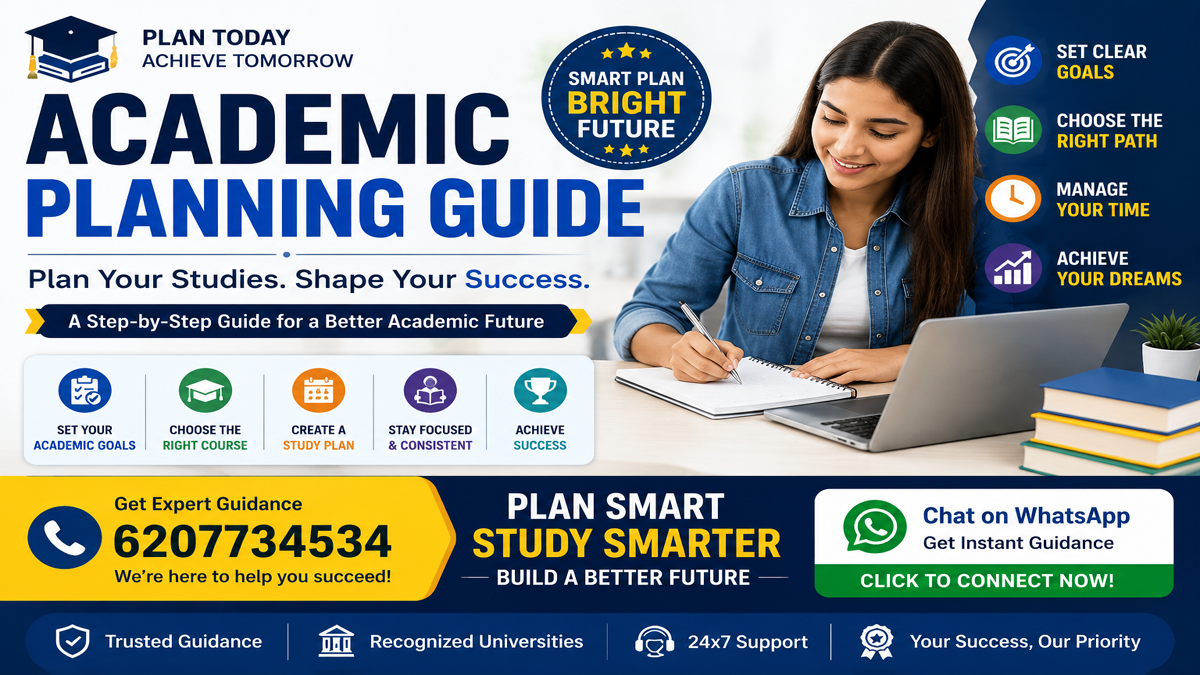
Academic Planning Guide for Students and Working Professionals
Academic planning is one of the most important steps toward achieving educational and career goals. Whether you are a school student, college learner, or working professional planning to continue your studies after an educational gap, a structured academic plan helps you make informed decisions. This guide explains how to set realistic goals, choose suitable learning pathways, and build a long-term education strategy.
What is Academic Planning?
Academic planning is the process of organizing your education based on your career aspirations, interests, eligibility, and available learning opportunities. It includes selecting the right course, understanding admission requirements, creating a study timeline, and regularly reviewing your progress.
A well-designed academic plan reduces confusion and helps students remain focused on achieving their educational objectives while balancing personal and professional responsibilities.
Benefits of Academic Planning
- Clear educational goals
- Better course selection
- Improved time management
- Reduced academic stress
- Career-oriented decision making
- Efficient financial planning for education
- Support for lifelong learning
How to Create an Effective Academic Plan
Creating an academic plan begins with understanding your current educational qualifications, future career aspirations, and available learning opportunities. A structured approach helps students make informed decisions and stay focused throughout their educational journey.
- Assess Your Current Qualification: Identify your highest completed education and any academic gaps.
- Define Your Career Goal: Decide whether you want to pursue higher education, prepare for competitive examinations, or enhance professional skills.
- Choose the Right Learning Path: Compare regular, online, distance, or flexible learning options offered by recognized institutions.
- Create a Study Timeline: Set realistic monthly and yearly milestones to complete your educational objectives.
- Review Your Progress: Regularly evaluate your achievements and update your academic plan whenever necessary.
Academic Planning for Students with Educational Gaps
An educational gap does not prevent students from continuing their studies. Many learners resume education after several years due to employment, family responsibilities, health concerns, financial challenges, or personal commitments.
Before selecting any educational pathway, students should verify eligibility requirements, admission criteria, and university recognition. Proper planning helps avoid confusion and ensures that future educational goals remain achievable.
Related Educational Guides
Choosing the Right Course
Selecting an appropriate course should be based on your interests, previous qualifications, career objectives, and long-term professional goals. Rather than choosing a program solely because of popularity, evaluate how it aligns with your future plans.
- Identify your strengths and interests.
- Research career opportunities associated with the course.
- Understand eligibility requirements.
- Verify the recognition status of the institution.
- Consider study flexibility if you are a working professional.
Time Management Strategies for Academic Success
Effective time management is an essential component of successful academic planning. Students who allocate dedicated study hours and maintain consistency are more likely to achieve their educational goals.
- Create a weekly study schedule.
- Set achievable daily learning targets.
- Avoid procrastination.
- Take regular revision sessions.
- Balance education with work and family responsibilities.
Financial Planning for Higher Education
Financial planning is an important part of academic success. Before enrolling in any educational program, students should estimate tuition fees, examination charges, study materials, transportation, and other related expenses. Preparing a realistic education budget helps avoid financial stress during the learning journey.
Students should also explore scholarships, education loans, government assistance programs, employer-sponsored education benefits, and flexible payment options whenever available.
- Estimate total education expenses.
- Prepare a yearly education budget.
- Explore scholarships and financial assistance.
- Keep emergency funds for unexpected expenses.
- Avoid making decisions without proper research.
Academic Planning for Working Professionals
Working professionals often face challenges while balancing employment, family responsibilities, and education. However, with proper planning and time management, continuing education becomes more achievable.
Flexible learning options, weekend classes, online education, and recognized distance learning programs can help professionals upgrade their qualifications without interrupting their careers.
Common Academic Planning Mistakes to Avoid
Many students experience delays in achieving their educational goals because of avoidable planning mistakes. Careful research and informed decision-making can significantly improve academic outcomes.
- Choosing a course without understanding career opportunities.
- Ignoring eligibility requirements.
- Not verifying university recognition.
- Poor time management.
- Lack of financial planning.
- Skipping academic counseling when needed.
- Ignoring degree verification procedures.
Importance of Degree Verification
Before relying on any educational qualification, students should understand the degree verification process. Verification helps confirm the authenticity of academic records and supports transparency during employment, higher education admissions, and document evaluation.
Always refer to the official procedures of the issuing institution whenever degree verification is required.
Read more in our detailed guide: Importance of Degree Verification
Educational Guidance
Every student's educational journey is unique. Proper academic planning, understanding eligibility, selecting recognized educational pathways, and verifying academic records are essential steps toward achieving long-term educational and career goals. This article is intended for general educational awareness and planning purposes. Students should always verify admission requirements, university recognition, and applicable regulations directly from the concerned institution before making any academic decision.
Contact UsFrequently Asked Questions (FAQs)
1. What is academic planning?
Academic planning is the process of organizing your education based on your career goals, interests, eligibility, and available learning opportunities. It helps students make informed educational decisions.
2. Why is academic planning important?
Academic planning provides a clear learning roadmap, improves time management, supports better course selection, and helps students achieve long-term educational and career objectives.
3. Can I continue my education after an academic gap?
Yes. Many recognized institutions allow eligible students to continue their education after an academic gap. Always verify admission criteria directly from the official institution.
4. How do I choose the right course?
Choose a course based on your interests, previous qualifications, career aspirations, eligibility, and future employment opportunities rather than short-term trends.
5. Is academic planning useful for working professionals?
Yes. Working professionals can benefit from structured academic planning to balance education, employment, and personal responsibilities effectively.
6. What factors should I consider before taking admission?
Students should verify university recognition, eligibility requirements, course duration, fee structure, learning mode, and official admission guidelines before applying.
7. Why should I verify my degree?
Degree verification helps confirm the authenticity of academic qualifications for employment, higher education, and professional documentation.
8. Can academic planning improve career growth?
Yes. Proper educational planning supports continuous learning, skill development, and better career opportunities over time.
9. How often should I review my academic plan?
It is advisable to review your academic plan every six to twelve months or whenever your educational or career goals change.
10. Where can I find more educational guidance?
You can explore our educational awareness articles covering educational gaps, degree completion, higher education, career planning, and degree verification.
Related Educational Articles
- Degree Completion Guide
- How to Continue Studies After a Gap
- Educational Gap After 5 Years
- Educational Gap After 15 Years
- Education After Job Gap
- Career Growth Through Education
- Benefits of Degree Completion
- Graduation vs Post Graduation Guide
- Higher Education for Working Professionals
- Importance of Degree Verification