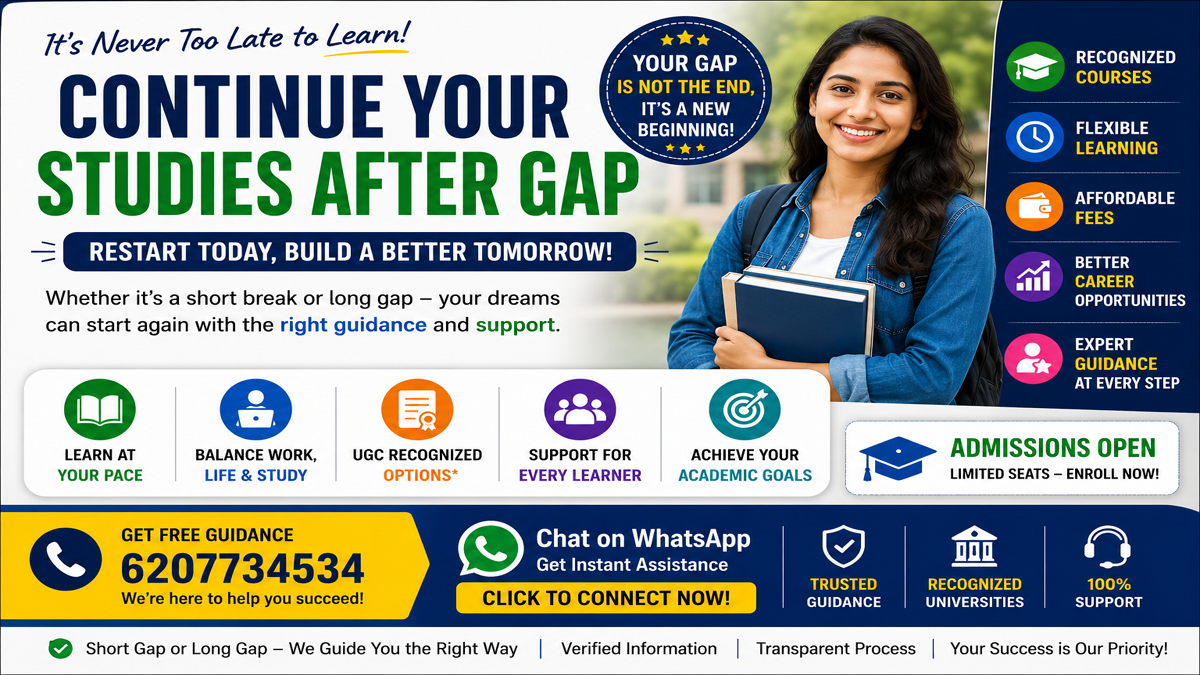
Restart Your Educational Journey with Proper Planning
Taking a break from education does not necessarily mean the end of your academic journey. Many students pause their studies because of financial responsibilities, employment, health concerns, family commitments, relocation, or personal circumstances. With careful planning and by understanding the admission requirements of recognized institutions, eligible learners can often continue their education after a gap.
The first step is to identify your educational goals, review your previous qualifications, understand eligibility requirements, and choose a learning pathway that fits your current situation. Every institution has its own admission policies, so applicants should always verify official guidelines before applying.
Can You Continue Studies After an Educational Gap?
In many cases, yes. Students and working professionals may be able to resume their education after a study gap if they meet the eligibility requirements of the institution and programme they are applying for. Factors such as the duration of the gap, previous qualifications, programme-specific rules, and institutional policies may influence admission decisions.
Instead of focusing only on the gap itself, it is more productive to prepare your academic documents, research suitable programmes, strengthen relevant skills, and develop a realistic study plan.
Common Reasons for Taking an Educational Gap
Educational gaps are more common than many people realize. Students may pause their studies for various personal, financial, or professional reasons. An academic break does not automatically prevent future learning opportunities, but admission requirements vary by institution and program. Understanding the reason behind your gap can help you plan your next educational step more effectively.
- Financial challenges or family responsibilities.
- Employment or starting a career after school.
- Preparation for competitive examinations.
- Health-related circumstances.
- Marriage or personal commitments.
- Relocation to another city or country.
- Business or self-employment responsibilities.
- Lack of career guidance during earlier education.
- Unexpected personal situations.
- Desire to return to education after gaining work experience.
Every learner has a unique journey. Rather than focusing only on the duration of the gap, it is more useful to identify your educational goals and understand the admission requirements of the institution where you wish to study.
Who Can Continue Studies After a Gap?
Many different categories of learners decide to return to education. Depending on eligibility and institutional policies, higher education opportunities may be available for individuals from diverse educational and professional backgrounds.
Students Who Commonly Resume Their Education
- Students with a gap after Class 10 or Class 12.
- Graduates planning higher education.
- Working professionals seeking career advancement.
- Homemakers returning to education.
- Business owners wanting additional qualifications.
- Students preparing for government examinations.
- Learners returning after several years of work experience.
- Adult learners pursuing lifelong learning.
Benefits of Continuing Your Education
Returning to education can contribute to personal growth and professional development. While outcomes vary depending on individual effort, qualifications, and career opportunities, structured learning helps individuals build knowledge and confidence over time.
- Expand academic knowledge.
- Develop practical and professional skills.
- Improve communication abilities.
- Support long-term career planning.
- Increase confidence in professional environments.
- Strengthen critical thinking and problem-solving skills.
- Promote lifelong learning habits.
- Stay updated with changing industry trends.
How to Prepare Before Restarting Your Studies
Preparation is one of the most important steps before applying for any educational programme. A well-prepared learner is better positioned to make informed decisions and successfully balance study with other responsibilities.
- Define your educational and career goals.
- Review your previous academic qualifications.
- Collect required educational documents.
- Research recognised institutions and programmes.
- Understand eligibility criteria carefully.
- Create a realistic study schedule.
- Estimate your education budget.
- Discuss your plans with family if necessary.
- Prepare for entrance or admission requirements where applicable.
- Maintain consistency throughout your learning journey.
Develop a Positive Learning Mindset
Returning to education after a gap may initially seem challenging, but many learners successfully continue their studies through careful planning and regular effort. A positive attitude, realistic expectations, and consistent study habits often contribute to better learning experiences.
Avoid comparing your journey with others. Focus on building knowledge step by step while balancing personal, academic, and professional responsibilities.
Continue Your Educational Journey
Every educational journey is different. Before choosing any course or institution, carefully verify admission eligibility, programme structure, institutional recognition, examination procedures, and other official requirements. Making informed decisions helps learners move forward with confidence.
Contact UsStep-by-Step Guide to Continue Studies After an Educational Gap
Returning to education becomes much easier when you follow a structured plan. Instead of making quick decisions, take time to understand your goals, evaluate your qualifications, and research suitable educational opportunities. A step-by-step approach helps reduce confusion and improves confidence throughout the admission process.
Step 1: Define Your Career Goal
Ask yourself why you want to continue your education. Your objective may be career advancement, skill development, higher education, professional certification, or personal growth. Having a clear goal makes course selection much easier.
Step 2: Review Your Previous Qualifications
Collect your previous educational documents and understand your eligibility before applying. Different institutions may have different admission policies and programme requirements.
Step 3: Research Recognized Institutions
Always review the official website of the institution. Check programme details, admission guidelines, curriculum, examination process, fee structure, and academic policies before submitting an application.
Step 4: Compare Available Courses
Compare multiple programmes based on your interests, career plans, duration, curriculum, learning format, and future opportunities instead of selecting the first available option.
Step 5: Prepare Required Documents
- Previous academic certificates
- Identity proof
- Passport-size photographs
- Address proof (if required)
- Other documents requested by the institution
How to Choose the Right Course After a Study Gap
Choosing the right course is one of the most important educational decisions. A programme should match your interests, educational background, professional goals, and future aspirations rather than temporary market trends.
- Choose a subject you genuinely enjoy learning.
- Consider long-term career opportunities.
- Understand programme eligibility.
- Review the complete curriculum.
- Check academic support services.
- Verify institutional recognition through official sources.
- Compare different learning formats before deciding.
Skills That Can Help Before Restarting Education
Improving essential academic and professional skills before returning to study can make the learning process smoother and more productive.
Useful Skills for Returning Students
- Communication Skills
- Computer Literacy
- Digital Learning Skills
- Time Management
- Critical Thinking
- English Language Improvement
- Presentation Skills
- Research Skills
- Note-Taking Techniques
- Problem-Solving Ability
Time Management Tips for Students Returning After a Gap
Many learners successfully balance studies with work and family responsibilities by following a realistic study routine. Consistency is generally more effective than studying for long hours only occasionally.
- Create a weekly study timetable.
- Study at a fixed time each day.
- Break large topics into smaller sections.
- Take short revision sessions every week.
- Reduce distractions while studying.
- Track your learning progress regularly.
- Maintain a healthy work-life-study balance.
Common Mistakes to Avoid
Avoiding common mistakes can save time, money, and unnecessary stress during your educational journey.
- Selecting a course without proper research.
- Ignoring eligibility requirements.
- Not checking institutional recognition.
- Depending only on unofficial information.
- Skipping academic planning.
- Poor financial planning.
- Ignoring time management.
- Not verifying academic documents when required.
Career Planning After Continuing Your Education
Continuing education can support long-term professional development by helping learners strengthen their knowledge and practical skills. Career outcomes depend on several factors, including qualifications, experience, individual performance, and employer requirements.
Regular learning, professional development, and continuous skill improvement help individuals remain adaptable in changing industries and prepare for future opportunities.
Educational Awareness
This guide is intended for educational awareness and general information only. Before applying to any educational programme, always verify eligibility requirements, institutional recognition, admission procedures, fee structure, and academic regulations directly from the official institution. Careful planning helps learners make informed educational decisions.
Get Educational GuidanceFrequently Asked Questions (FAQs)
1. Can I continue my studies after a long educational gap?
Yes. Many institutions allow eligible students to continue their education after an academic gap. Admission depends on the institution's eligibility criteria and programme requirements.
2. Is there an age limit for continuing higher education?
Age limits vary depending on the institution and programme. Many higher education programmes are available to adult learners and working professionals.
3. How do I choose the right course after a study gap?
Choose a course that matches your previous qualification, career objectives, interests, eligibility, and long-term goals.
4. Can working professionals continue their studies?
Yes. Many working professionals continue higher education while managing their careers through various learning options offered by institutions.
5. What documents are generally required for admission?
Requirements vary by institution, but commonly requested documents include previous academic certificates, identity proof, photographs, and other documents specified by the institution.
6. Why is academic planning important?
Academic planning helps students organize their educational journey, manage time effectively, and make informed decisions.
7. Can education improve career opportunities?
Education helps learners develop knowledge and skills. Career outcomes depend on qualifications, experience, performance, and employer requirements.
8. Should I verify the institution before taking admission?
Yes. Always review the institution's official information regarding recognition, admission rules, curriculum, examinations, and academic policies.
9. Is time management important after restarting studies?
Yes. A realistic study schedule helps learners balance education, work, and family responsibilities.
10. How can I stay motivated after returning to education?
Set realistic goals, celebrate small achievements, maintain consistency, and focus on long-term learning rather than short-term results.
11. Can I study while doing a full-time job?
Many learners successfully combine employment and education through careful planning and by choosing programmes that suit their schedules.
12. What should I consider before applying?
Review eligibility, course curriculum, fees, duration, assessment methods, institutional recognition, and official admission guidelines.
13. How can I improve my study habits?
Create a weekly study plan, revise regularly, minimize distractions, and maintain a consistent learning routine.
14. Does an educational gap affect future learning?
A study gap does not automatically prevent future education. Admission decisions depend on programme requirements and institutional policies.
15. Where can I find more educational guidance?
You can explore our educational awareness articles on academic planning, educational gaps, career development, degree completion, and degree verification.
Related Educational Guides
- Degree Completion Guide
- Academic Planning Guide
- Educational Gap After 5 Years
- Educational Gap After 15 Years
- Can I Study After 30 Years of Age?
- Higher Education for Working Professionals
- Career Growth Through Education
- Benefits of Degree Completion
- Education After Job Gap
- Graduation vs Post Graduation Guide
- Importance of Degree Verification
Need Educational Guidance?
Planning to continue your education after a gap? Start by understanding your eligibility, choosing a suitable course, verifying institutional recognition, and creating a practical academic plan. Making informed decisions today can help support your long-term educational and professional goals.
Contact Us